
✅️ Within the framework of the ID:CITIZEN project, we present positive examples in legislation that show that accessibility must be established as a systemic right, through legal obligations, public policies, funding, control and institutional support:
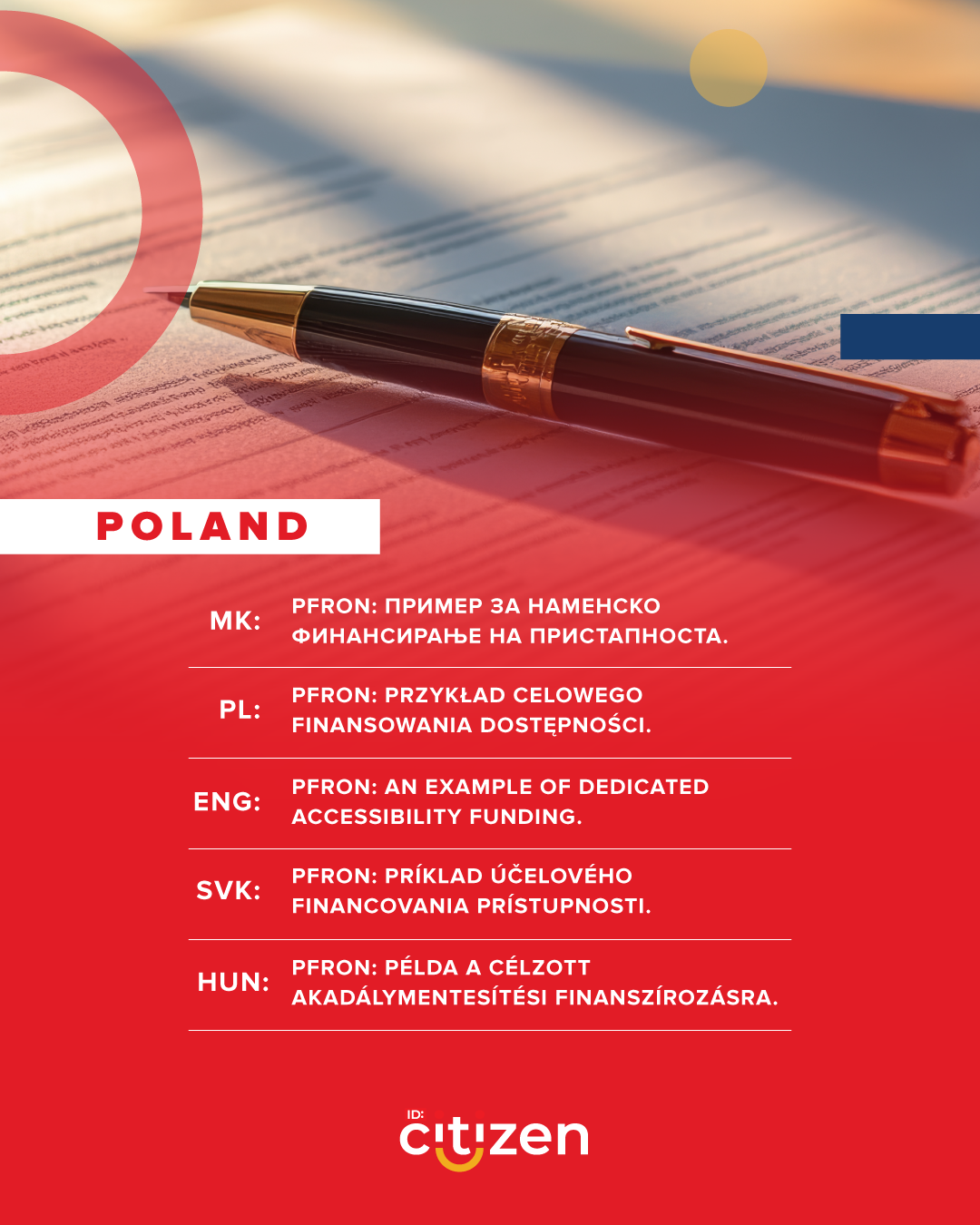
🇵🇱: Poland is a strong example of a country that supports accessibility not only through laws, but also through a stable funding mechanism. The State Fund for the Rehabilitation of Persons with Disabilities – PFRON provides funds for job adaptations, assistive technologies, housing adaptations, social inclusion, and improving institutional accessibility.
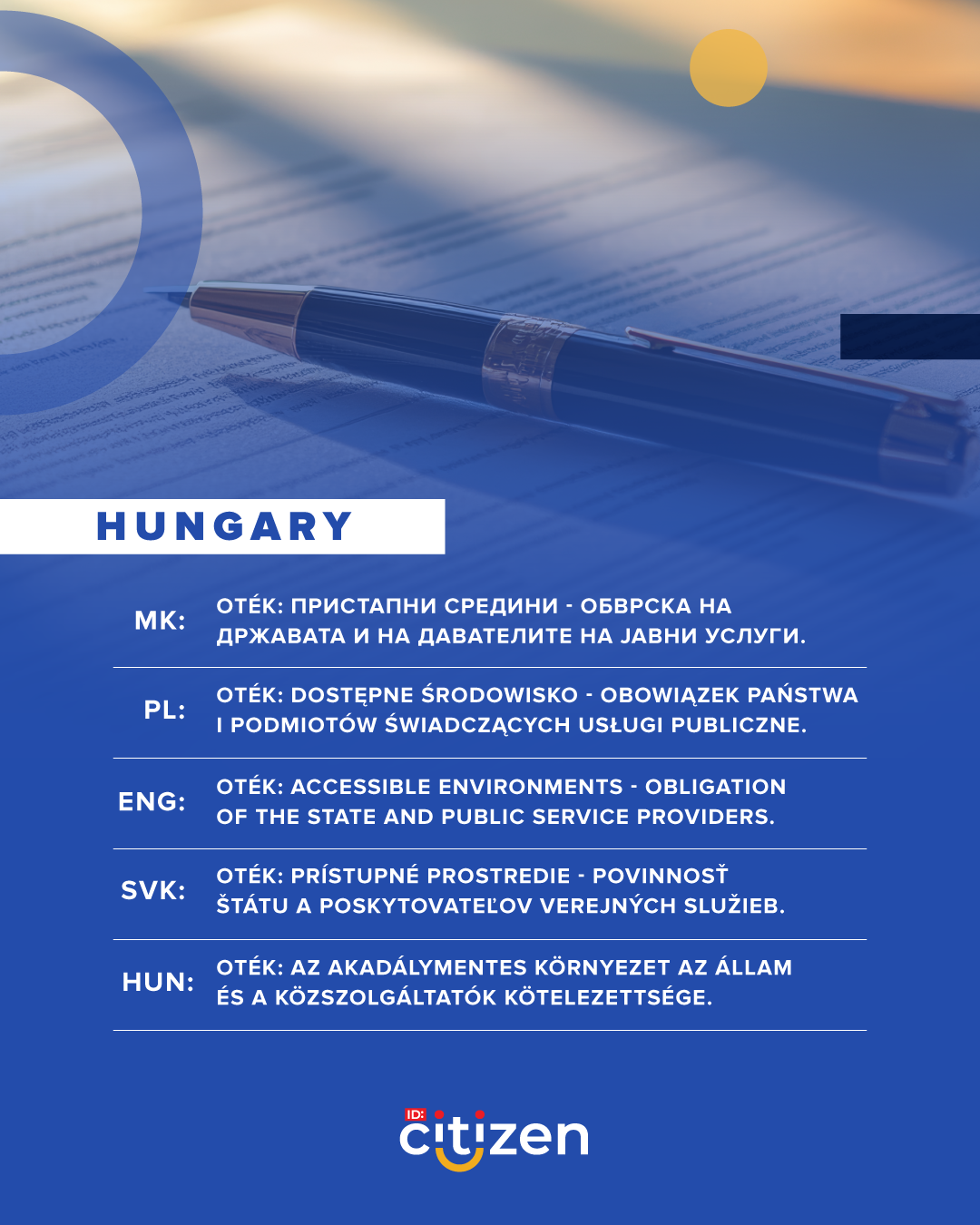
🇭🇺: Hungary has a clear legal framework that links accessibility to equal opportunities, public services, and the built environment. Through the laws on the rights of persons with disabilities, the protection of the built environment, and the National Building Code OTÉK, the responsibility of the state and institutions to create spaces accessible to all is defined.
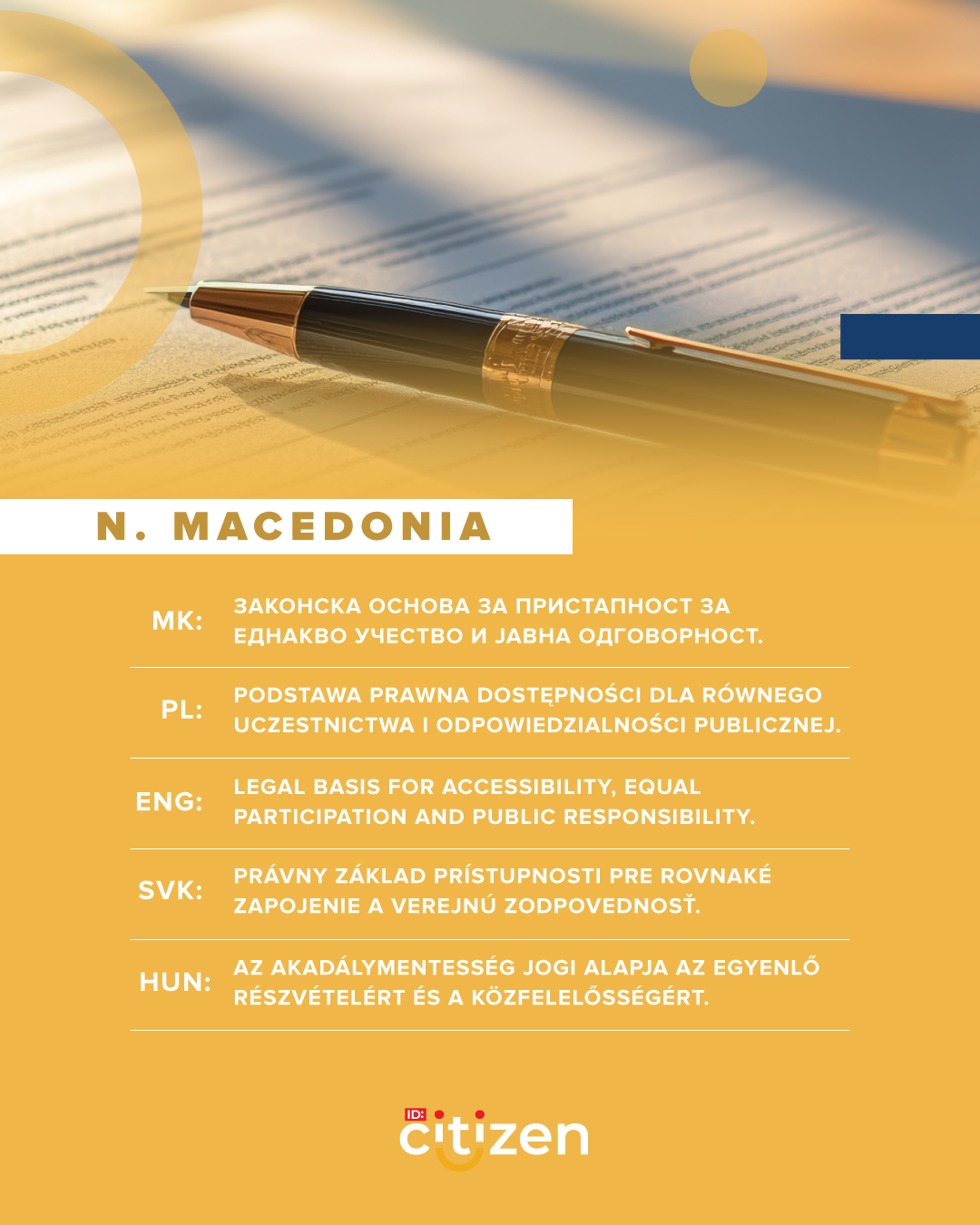
🇲🇰: Macedonia has an important legal basis through the Law on Construction, the Law and Regulation on Urban Planning, and the Law on Prevention and Protection from Discrimination. This is an important basis that positions accessibility as part of public space, movement, services, and equal participation.
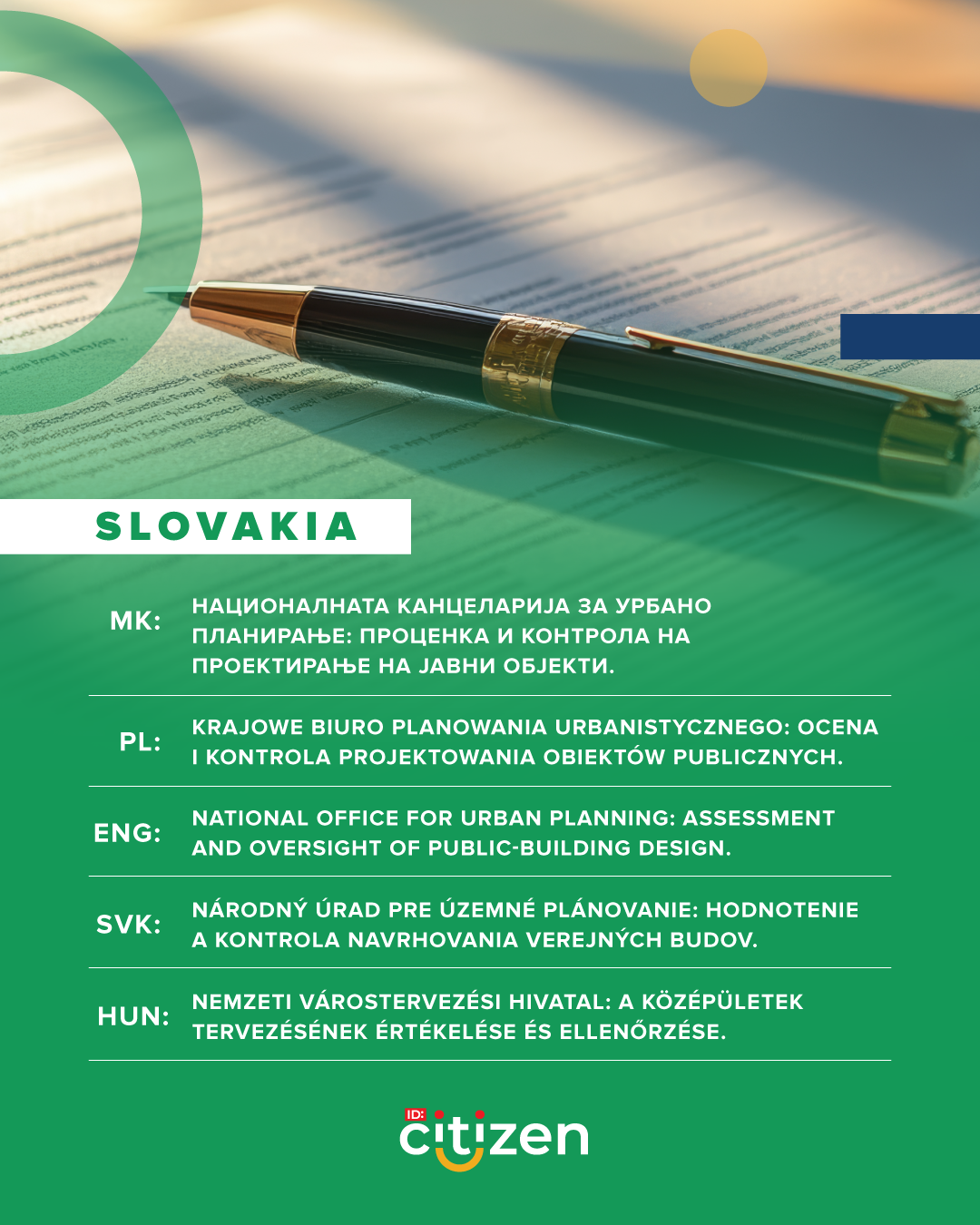
🇸🇰: The National Urban Planning Office of the City of Bratislava is an example of an institutional approach to accessibility in public environments. By creating guidelines, assessment and control during the design of public buildings, accessibility is built in before the space is built.
✨ The international ID:CITIZEN campaign aims to promote positive examples of improving accessibility and inclusion of people with disabilities in culture, education, and public spaces in 🇲🇰🇭🇺🇵🇱🇸🇰.
🇵🇱: Poland is a strong example of a country that supports accessibility not only through laws, but also through a stable funding mechanism. The State Fund for the Rehabilitation of Persons with Disabilities – PFRON provides funds for job adaptations, assistive technologies, housing adaptations, social inclusion, and improving institutional accessibility.
🇭🇺: Hungary has a clear legal framework that links accessibility to equal opportunities, public services, and the built environment. Through the laws on the rights of persons with disabilities, the protection of the built environment, and the National Building Code OTÉK, the responsibility of the state and institutions to create spaces accessible to all is defined.
🇲🇰: Macedonia has an important legal basis through the Law on Construction, the Law and Regulation on Urban Planning, and the Law on Prevention and Protection from Discrimination. This is an important basis that positions accessibility as part of public space, movement, services, and equal participation.
🇸🇰: The National Urban Planning Office of the City of Bratislava is an example of an institutional approach to accessibility in public environments. By creating guidelines, assessment and control during the design of public buildings, accessibility is built in before the space is built.
✨ The international ID:CITIZEN campaign aims to promote positive examples of improving accessibility and inclusion of people with disabilities in culture, education, and public spaces in 🇲🇰🇭🇺🇵🇱🇸🇰.