
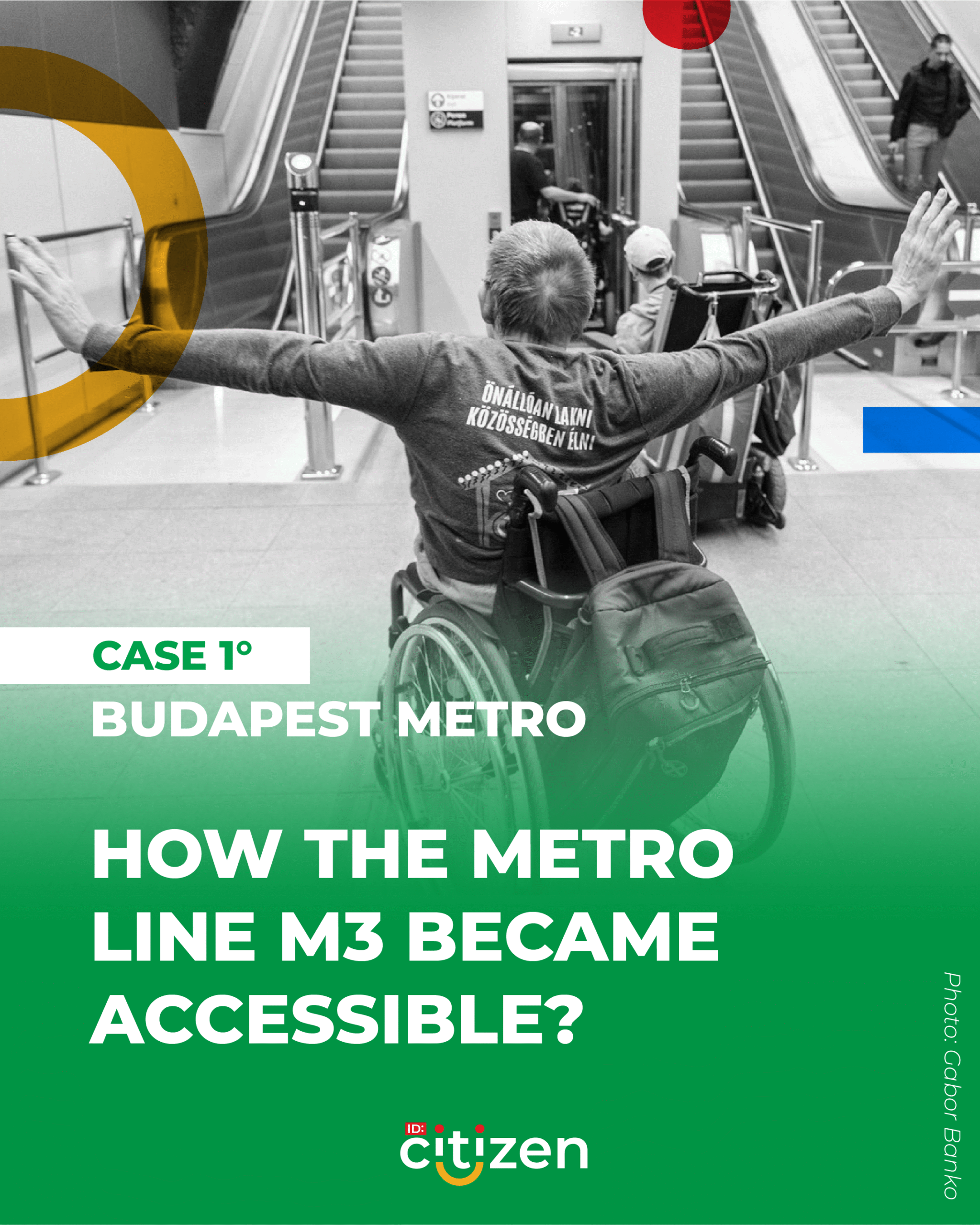
🚉 HOW DID THE M3 LINE IN BUDAPEST BECOME ACCESSIBLE?
🚧 Announced plans for the reconstruction of the M3 Metro Line in Budapest in 2017 did not guarantee full accessibility, which raised concerns among disability rights organizations, who feared that the line would continue to exclude thousands of citizens from safe and independent travel.
💪🏼 Citizen campaigns such as “Give us wings!” and the advocacy of MEOSZ (National Federation of Associations of People with Physical Disabilities) played a key role. Thanks to awareness-raising actions and negotiations with local authorities, a decision was made to fully adapt all 20 stations by 2023.
🏆 Today, the M3 line is an example of inclusive infrastructure – proof that civic action and inclusive planning can transform public transportation into a space that enables dignity and equality.
📢 The international ID:CITIZEN campaign aims to promote positive examples of improving accessibility and inclusion of people with disabilities in culture, education, and public spaces in 🇲🇰🇭🇺🇵🇱🇸🇰.